Built to Last: How to Design a Registration System That Keeps Pace With Shifting US Regulations
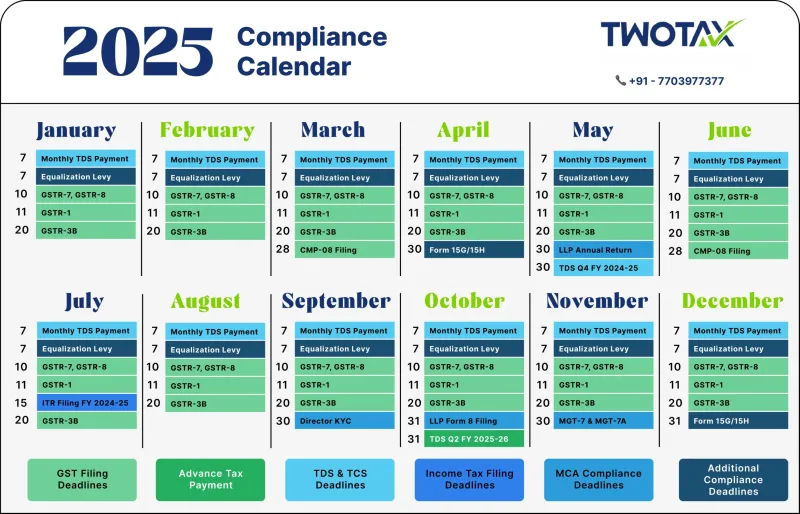
Photo: regulatory compliance calendar desk planning documents, via www.twotax.in
For many US organizations, the compliance conversation happens too late—after a data breach, a failed audit, or a legal notice citing a regulation that quietly took effect months earlier. Registration systems, which sit at the precise intersection of data collection, user consent, and organizational recordkeeping, are especially vulnerable to this pattern. What passed scrutiny two years ago may fall short of current standards today.
The challenge is not simply staying informed. It is building infrastructure that does not need to be rebuilt every time a state legislature updates its data privacy statute or the federal government revises accessibility guidance. The goal is a registration platform that evolves incrementally rather than one that requires emergency overhauls.
Why Registration Systems Become Compliance Liabilities
Most registration systems are not designed with regulation in mind. They are designed for conversion—getting users through a form quickly and efficiently. That is a legitimate priority, but it frequently produces systems with hardcoded field structures, minimal audit functionality, and no clear mechanism for updating consent language on short notice.
The regulatory environment these systems now operate in is considerably more demanding. The California Consumer Privacy Act (CCPA), Virginia's Consumer Data Protection Act (CDPA), and a growing list of state-level equivalents impose specific obligations around how personal data is collected, stored, and disclosed. The Americans with Disabilities Act (ADA) and Section 508 of the Rehabilitation Act establish accessibility standards that apply to digital forms used by organizations receiving federal funding. Meanwhile, IRS reporting requirements for nonprofit membership organizations, FERPA considerations for educational institutions, and HIPAA adjacency for health-related events each introduce sector-specific layers.
A registration system that cannot accommodate these requirements cleanly—without workarounds, manual overrides, or developer intervention—is not just inconvenient. It is a structural risk.
The Architecture of Adaptability
Building a compliance-ready registration platform begins with separating what changes from what does not. Core data collection logic—names, contact information, payment processing—tends to be stable. Consent language, data retention policies, required disclosures, and field-level permissions, however, shift with the regulatory calendar.
Organizations that treat these two categories as a single monolithic system inevitably find themselves rewriting core functionality every time a peripheral requirement changes. The more durable approach is a modular architecture in which compliance-sensitive elements—consent checkboxes, privacy notices, accessibility accommodations—can be updated independently of the underlying form structure.
This modularity is not purely a technical matter. It also requires governance: someone within the organization must own the compliance layer of the registration system, monitor relevant regulatory developments, and have the authority to initiate updates without routing every change through a full development cycle.
Audit Trails as a Default, Not an Add-On
One of the most consistent gaps in legacy registration systems is the absence of meaningful audit documentation. When a registrant submits a form, what was the exact consent language displayed at that moment? Which version of the privacy policy was in effect? What fields were required versus optional? In the event of a regulatory inquiry, these questions are not hypothetical.
A well-designed registration platform captures this context automatically. Every submission should be associated with a timestamped record of the form version presented, the disclosures acknowledged, and the data fields completed. This is not about surveillance—it is about being able to demonstrate, with specificity, that the organization met its obligations at the time of collection.
Automatic audit trail generation also simplifies the internal review process. Rather than reconstructing historical form states from screenshots and developer notes, compliance staff can pull structured records on demand. That capability is particularly valuable for organizations that run recurring events or annual membership cycles, where form content may shift between iterations.
Monitoring the Regulatory Calendar
No registration system, however well-designed, can self-update in response to new legislation. Human oversight remains essential. Organizations operating across multiple states face the added complexity of tracking a patchwork of requirements that do not always align with one another.
A practical approach involves designating a compliance review cadence—quarterly at a minimum—during which the registration system is evaluated against any regulatory developments since the last review. This review should encompass data privacy updates at both the state and federal level, accessibility standard revisions (the Web Content Accessibility Guidelines, or WCAG, are updated periodically), and any sector-specific changes relevant to the organization's activities.
Legal counsel or a compliance consultant should be part of this process, particularly for organizations operating in states with active data privacy legislation. Relying solely on internal staff to interpret evolving statutory language introduces unnecessary risk.
Incremental Adaptation Over Periodic Overhauls
The organizations that manage regulatory compliance most effectively are those that treat it as a continuous operational function rather than a periodic crisis. Each small update—revised consent language here, an added accessibility attribute there—is far less disruptive than a comprehensive system rebuild triggered by accumulated neglect.
This incremental model also supports institutional knowledge. When changes are documented as they occur, the organization retains a clear record of why specific design decisions were made and when. That record becomes invaluable when onboarding new staff, responding to audits, or evaluating whether the current system remains fit for purpose.
A registration platform designed with adaptability as a first principle—modular, well-documented, and supported by automatic audit functionality—does not eliminate compliance risk. No system can. But it substantially reduces the likelihood that a regulatory shift will catch the organization flat-footed, and it ensures that the cost of staying current remains manageable over time.
For organizations that rely on registration as a core operational function, that durability is not a technical luxury. It is a strategic necessity.